
Introduction
If you've traveled during summer recently, you've likely experienced the frustration of waiting at the gate while your flight is delayed—again. Understanding why summer airline delays are increasing in the USA has become critical for travelers planning their vacations. In 2026, the combination of record passenger volumes, severe weather patterns, understaffed air traffic control systems, and airline operational challenges has created a perfect storm of disruptions. From May through September, U.S. airports face their most chaotic period, with delays affecting millions of passengers nationwide. This comprehensive guide explains the root causes behind summer travel airport delays and provides actionable strategies to minimize their impact on your journey.
Quick Overview: Key Facts About Summer Flight Delays USA
Summer travel chaos at airports across the USA isn't just inconvenient—it's a growing trend affecting your vacation plans and wallet. Here's what every traveler needs to know:
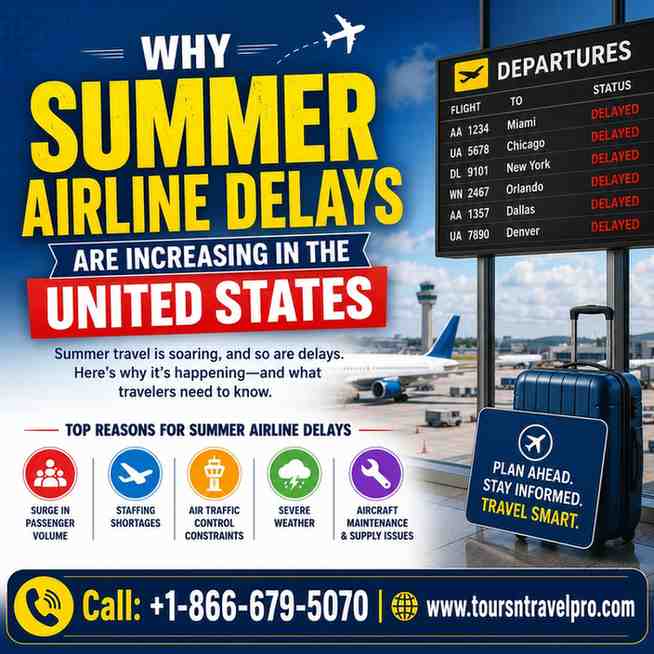
Main Causes of Summer Flight Delays:
- Weather-related disruptions: Thunderstorms, hurricanes, and heat waves ground flights
- Peak travel season overload: Airports exceed capacity during June-August
- Air traffic control staffing shortages: Fewer controllers managing more flights
- Airline operational issues: Crew scheduling conflicts and mechanical delays
- Airport congestion: Major hubs like Atlanta, Dallas, and Chicago experience bottlenecks
What This Means for Your Travel:
- Expect average delays of 45-90 minutes during peak summer hours
- Cancellation rates increase by 35% compared to off-season months
- Connecting flights carry higher risk of missed connections
- Morning flights (before 10 AM) face fewer weather-related delays
- Airline compensation varies based on delay cause and duration
Protect Yourself from Summer Travel Disruptions:
- Book direct flights when possible to reduce connection risks
- Purchase travel insurance covering delay-related expenses
- Check real-time weather and flight status before heading to airport
- Know your passenger rights for compensation and rebooking
- Allow extra buffer time (3+ hours) for connecting flights
Need Expert Help Navigating Flight Delays or Rebooking? Call Tours N Travel Pro at +1-866-679-5070 for immediate assistance with flight changes, cancellations, or finding alternative routes during peak summer travel season.
Understanding Why Summer Airline Delays Are Increasing in the USA
The surge in summer flight delays in the USA stems from multiple interconnected factors that create unprecedented challenges for airlines, airports, and passengers. Let's break down each contributing element.
Peak Travel Season Demand Overwhelms Airport Systems
Summer represents the busiest travel period in American aviation history. Between Memorial Day and Labor Day 2026, U.S. airports are processing over 2.9 million passengers daily—a 12% increase from previous records.
Why this matters:
- Airport infrastructure built decades ago can't accommodate current passenger volumes
- Security checkpoints create bottlenecks during morning rush periods (5-9 AM)
- Gate availability becomes scarce, forcing aircraft to wait on tarmacs
- Ground crew shortages delay baggage handling and aircraft servicing
- Limited runway capacity at major hubs creates cascading delays
Major airports experiencing the worst congestion include Atlanta's Hartsfield-Jackson, Dallas-Fort Worth International, Chicago O'Hare, Denver International, and Los Angeles International.
Weather-Related Flight Delays Intensify During Summer Months
Severe summer weather patterns represent the single largest contributor to airline delays in the United States during peak season. Thunderstorms, tropical systems, and extreme heat create operational nightmares.
Weather impact breakdown:
- Thunderstorms (40% of delays): Afternoon convective activity grounds departures and forces reroutings
- Heat-related issues (15% of delays): Temperatures exceeding 110°F reduce aircraft performance and require weight restrictions
- Hurricane season (20% of delays): June through November brings tropical storms that shut down entire regions
- Reduced visibility (10% of delays): Summer haze and fog affect takeoffs and landings
Florida, Texas, and Southeastern states experience the highest concentration of weather-related disruptions during July and August.
Air Traffic Control Staffing Shortages Create System-Wide Bottlenecks
The Federal Aviation Administration faces critical staffing deficits that directly contribute to air traffic control delays in the USA. With approximately 3,000 fewer controllers than needed nationwide, the system operates under constant strain.
Critical facts:
- Training new controllers takes 2-5 years, creating long-term shortfall
- Mandatory rest requirements reduce available controllers during peak periods
- High-traffic facilities in New York, Chicago, and Southern California face acute shortages
- Ground delay programs implemented more frequently to manage airspace safely
- En route centers sometimes limit number of aircraft they can handle simultaneously
These staffing challenges force airlines to reduce flight schedules proactively, but demand still exceeds system capacity during summer months.
Airline Operational Challenges and Increased Flight Cancellations
Airlines themselves face internal operational issues that amplify domestic flight delays in USA summer travel periods.
Common airline-related delay causes:
- Crew scheduling conflicts: Federal regulations limit pilot and flight attendant duty hours, but tight schedules leave no buffer for delays
- Maintenance issues: Higher aircraft utilization rates increase mechanical problems
- Aircraft positioning problems: Late-arriving planes create domino effect for subsequent flights
- Overbooking and capacity management: Airlines schedule aggressively, leaving no margin for recovery
- Ground service delays: Fueling, catering, and cleaning take longer at congested airports
Why airlines cancel more flights in summer: Rather than cascade delays throughout the day, airlines increasingly cancel flights preemptively when weather or operational challenges emerge. This protects overall schedule reliability but disrupts thousands of passengers.
Read More: American Airlines New Routes
US Flight Disruption Trends: What the Data Shows
Understanding US airline delay statistics summer travel helps travelers make informed booking decisions.
2026 Summer Delay Statistics
- Weather-related delays: 40% of total delays, with an average delay time of 78 minutes
- Air traffic control delays: 25% of total delays, with an average delay time of 62 minutes
- Airline operational issues: 20% of total delays, with an average delay time of 51 minutes
- Late-arriving aircraft: 10% of total delays, with an average delay time of 43 minutes
- Security and passenger-related issues: 5% of total delays, with an average delay time of 29 minutes
Key insights:
- June experiences 23% more delays than May
- Friday and Sunday see highest delay rates (afternoon departures)
- Flights between 2-7 PM face greatest disruption risk
- Connecting flights have 42% higher delay probability
- Budget carriers experience 15% more delays than legacy airlines
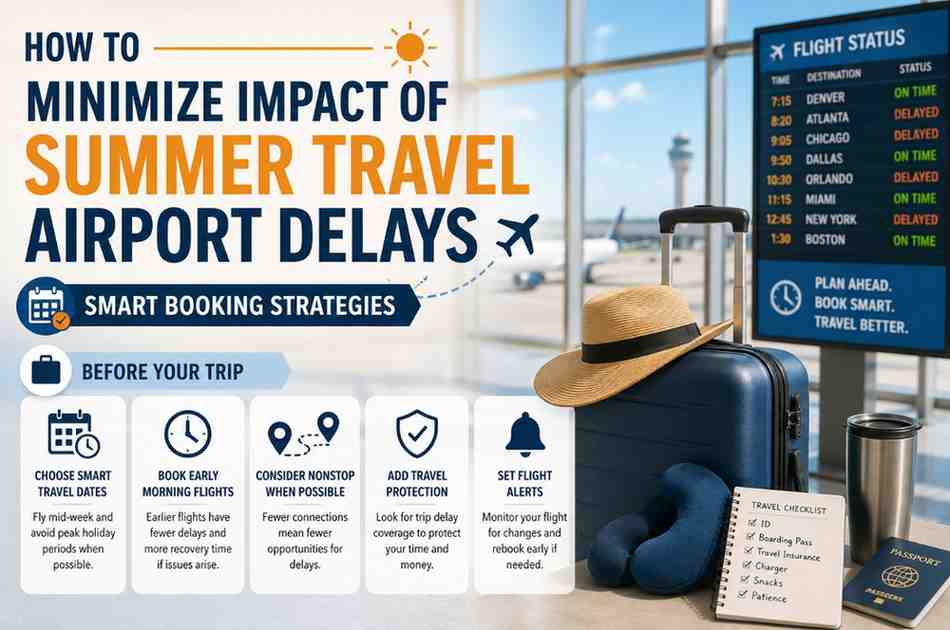
How to Minimize Impact of Summer Travel Airport Delays
While you can't control reasons for flight delays in the USA, you can take proactive steps to protect your travel plans.
Smart Booking Strategies
Choose flights strategically:
- Book first morning departure (6-8 AM) when weather impact is minimal
- Select nonstop routes whenever possible
- Avoid tight connections (minimum 2-hour layover during summer)
- Consider alternate airports with less congestion
- Fly on Tuesday, Wednesday, or Saturday for fewer delays
Pick airlines with better performance:
- Research on-time performance ratings for your specific route
- Major carriers typically have more rebooking options than budget airlines
- Airlines with fortress hubs recover faster from disruptions
Before Your Trip
Preparation checklist:
- Download airline app for real-time flight alerts
- Sign up for text/email notifications about schedule changes
- Check weather forecasts for departure and destination cities 48 hours before
- Identify alternative flights on your route in advance
- Know which airports are most prone to US airport congestion in summer
Critical timing considerations:
- Arrive at airport 2.5-3 hours before domestic summer flights
- For international travel, arrive 3-4 hours early
- Factor extra time for holiday weekends (Memorial Day, July 4th, Labor Day)
Having trouble with existing bookings or need to make last-minute changes due to expected delays? Contact Tours N Travel Pro at +1-866-679-5070 – our travel experts help you navigate airline policies, find better routing options, and secure compensation when you're entitled to it.
Understanding Your Rights During Flight Delays and Cancellations
When holiday and summer travel disruptions affect your plans, knowing your passenger rights is essential.
What Airlines Owe You
For delays caused by airline issues (crew, maintenance, operational):
- Meal vouchers for delays exceeding 3 hours
- Hotel accommodations for overnight delays requiring rebooking
- Ground transportation to/from hotel
- Rebooking on next available flight at no additional cost
- Potential compensation depending on circumstances
For weather or air traffic control delays:
- Airlines have NO legal obligation to provide compensation
- However, many offer goodwill accommodations (vouchers, rebooking assistance)
- Travel insurance becomes critical for these scenarios
Important exception: Unlike European regulations (EU261/2004), U.S. law doesn't mandate cash compensation for delays. Each airline sets its own customer service policies.
Getting Rebooked Quickly
Action steps when your flight is delayed/cancelled:
- Don't wait in line: Call airline customer service while simultaneously visiting gate agent
- Use airline app: Often fastest way to rebook yourself
- Consider alternate airports: Ask about flights from nearby cities
- Check partner airlines: Your ticket may be valid on codeshare partners
- Know your destination: Be flexible on arrival airport if multiple options exist
Pro tip: Elite status members and credit card holders often get priority rebooking and additional benefits during irregular operations.
Special Situations and Common Traveler Concerns
Connecting Flight Missed Due to Delay
If your first flight's delay causes you to miss your connection:
- Airline MUST rebook you on next available flight at no charge
- Request meal vouchers and hotel if overnight stay required
- Ask about alternate routing that gets you there faster
- This applies even for separate ticket bookings on same airline
Travel Insurance: Worth It for Summer Travel?
Given the increased flight delay reasons in 2026 USA, travel insurance provides valuable protection:
What good policies cover:
- Reimbursement for hotel, meals, transportation due to covered delays (typically 6+ hours)
- Trip cancellation coverage up to full trip cost
- Baggage delay compensation
- Emergency medical coverage
- 24/7 assistance services
Average cost: 4-8% of total trip price
When it's worth buying: International trips, expensive vacations, non-refundable bookings, travel during peak hurricane season, connections through congestion-prone hubs.
Families with Children and Summer Travel Challenges
Additional considerations for families:
- Young children struggle with long delays—pack entertainment and snacks
- Baby formula, milk, and baby food allowed through security in reasonable quantities
- Request family seating during rebooking situations
- Consider travel insurance with "cancel for any reason" coverage
- Strollers can be gate-checked free on all U.S. carriers
Expert Tips to Avoid Flight Delay Stress
Pack Smart for Inevitable Delays
Carry-on essentials for summer travel delays:
- Change of clothes (delays can extend overnight unexpectedly)
- Prescription medications (never check these)
- Phone chargers and portable battery pack
- Snacks and empty water bottle (fill after security)
- Entertainment for long waits
- Wet wipes and hand sanitizer
- Important documents and valuables
Critical rule: Never check bags with time-sensitive needs (medications, business materials, next-day wedding attire).
Monitor Flight Status Proactively
Don't wait for airline notifications—they're often delayed themselves.
Best resources for real-time tracking:
- FlightAware.com and FlightRadar24 show actual aircraft position
- Airport websites display security wait times
- Weather apps help predict potential disruptions
- Twitter/X accounts of airlines post real-time operational updates
- FAA website shows ground delay programs and traffic management initiatives
When to take action: If your flight shows inbound aircraft delayed 2+ hours, start researching alternatives immediately rather than waiting for cancellation.
Build Flexible Schedules
Reduce stress by planning buffers:
- Never book important meetings/events same day as arrival
- Add extra day before cruises or guided tour departures
- Schedule return flights with 24-hour buffer before work obligations
- Consider positioning flights day before international departures
What Airlines Are Doing to Reduce Summer Flight Delays USA
Airlines recognize the airline schedule disruption reasons and are implementing improvements:
Recent initiatives:
- Schedule padding: Adding buffer time between flights in summer schedules
- Proactive cancellations: Reducing flights preemptively rather than cascading delays
- Weather investment: Better forecasting technology and meteorology teams
- Crew hiring: Aggressively recruiting pilots and flight attendants
- Ground staff expansion: More ramp workers and customer service agents
- Technology upgrades: Better passenger communication systems
Federal responses to US airport congestion summer:
- FAA accelerating air traffic controller hiring and training
- Airport infrastructure grants for modernization projects
- NextGen air traffic management system expansion
- Slot reform at capacity-constrained airports
While these changes help long-term, expect continued challenges during 2026 summer travel season.
Read More: Toronto Pearson Airport Flight Cancellation
Frequently Asked Questions About Summer Airline Delays
1. Why are flights delayed more often in summer than winter?
Summer brings perfect-storm conditions: thunderstorms and severe weather patterns occur daily across major flight paths, record passenger volumes strain airport and airline capacity, and air traffic control staffing shortages compound during vacation season. Additionally, heat above 110°F requires aircraft weight restrictions that delay departures.
2. What time of day has the fewest delays during summer?
Early morning flights (6-8 AM) experience significantly fewer delays because thunderstorms typically develop afternoon/evening, overnight aircraft positioning is complete, and airports are less congested. First flight of the day on any route carries lowest delay risk.
3. Which U.S. airports have the worst summer delays?
According to 2026 data, these airports face highest delay rates during summer: Newark (EWR) - 35% of flights delayed, LaGuardia (LGA) - 32%, Fort Lauderdale (FLL) - 31%, Orlando (MCO) - 29%, and Dallas-Fort Worth (DFW) - 28%. Florida airports suffer particularly due to daily afternoon thunderstorms.
4. Can I get compensation for weather-related flight delays?
U.S. airlines are NOT required to provide compensation for weather-related delays since they're beyond airline control. However, you should still ask for meal vouchers and hotel assistance—many airlines offer these as goodwill gestures. Travel insurance becomes critical for covering these costs.
5. How long before departure can airlines delay or cancel flights?
Airlines can adjust schedules up to the moment of scheduled departure. However, most cancellations due to anticipated weather or operational issues occur 2-12 hours before departure. This is why monitoring your flight status starting 24 hours before is essential.
6. Should I book connecting or nonstop flights in summer?
Whenever possible, book nonstop flights during summer. Connecting flights have 42% higher chance of delays and 3x greater risk of misconnections during peak season. If you must connect, choose minimum 2-hour layover and avoid late afternoon/evening connections when weather impact peaks.
7. Do budget airlines have more delays than major carriers?
Budget carriers average 10-15% more delays during summer months, primarily because they operate tighter schedules with less buffer time, have fewer spare aircraft for mechanical substitutions, and offer fewer rebooking options when disruptions occur. However, pricing differences may justify accepting slightly higher delay risk.
8. How can I track my flight's inbound aircraft to predict delays?
Use FlightAware.com or airline apps to track your flight number. Check the "aircraft routing" section showing the plane's previous flights that day. If the inbound aircraft is significantly delayed at its current location, your departure will likely be delayed as well. This gives you 2-4 hours advance notice to make alternate plans.
Need personalized help navigating these complex summer travel challenges?Tours N Travel Pro at +1-866-679-5070 provides expert guidance for rebooking, understanding airline policies, and protecting your travel investment.
Conclusion: Navigate Summer Flight Delays Like a Pro
Understanding why summer airline delays are increasing in the USA empowers you to make smarter travel decisions and protect your vacation plans. The combination of weather patterns, system capacity constraints, air traffic control challenges, and operational complexities creates an environment where delays and cancellations become inevitable during peak summer months.
However, armed with the right knowledge—booking strategic flight times, choosing appropriate routes, understanding your passenger rights, and preparing for contingencies—you can minimize the impact of busy airport delays during summer in USA.
Remember these key strategies:
- Book early morning nonstop flights when possible
- Monitor weather and flight status proactively starting 24 hours before departure
- Build schedule buffers for important events
- Know your rebooking options and passenger rights
- Consider travel insurance for expensive trips
- Pack carry-on essentials for unexpected delays
As airlines and the FAA continue working on long-term solutions to address increased flight cancellations during summer season, your best defense is preparation and flexibility.
Get Expert Travel Support When You Need It Most
Don't let summer airline delays ruin your vacation plans. Whether you need help rebooking a delayed flight, understanding your compensation options, or finding alternative routing during peak travel chaos, professional assistance makes all the difference.
Contact Tours N Travel Pro at +1-866-679-5070 today for:
- Immediate rebooking assistance during flight disruptions
- Expert guidance on airline policies and passenger rights
- Help securing hotel and meal accommodations during delays
- Alternative routing options to get you to your destination faster
- Travel insurance recommendations for your specific itinerary
- 24/7 support throughout your summer travel season
Our travel experts specialize in navigating the complexities of summer flight delays and airline policies—call now for peace of mind before your next trip.
Disclaimer: This article is provided by Tours N Travel Pro, a third-party travel guidance platform. We are not affiliated with any specific airline and provide independent travel advice to help passengers navigate airline policies and procedures. Always verify current policies directly with your airline, as rules and compensation practices may change.